
A European answer to one critical challenge: bridging the gap between virtual and physical worlds.
Project Facts
- Automotive manufacturing
- Human–robot collaboration
- Clinical rehabilitation
Further details and complete factsheet are available on CORDIS - European Commission.
About
Virtual worlds are moving out of the lab and into daily industrial and clinical use across Europe. But most Extended Reality (XR) systems today still struggle with a basic problem: what you see and feel in the virtual environment doesn't always match what's really happening around you.
This happens because vision, sound, touch and motion tracking are usually developed as separate technologies, then stitched together. The result is delay, glitches, and a loss of trust, exactly when trust matters most: in a factory, an operating room, or a rehabilitation clinic.
Europe is also at risk of depending on non-European platforms for these technologies. VICTOR-XR responds to this gap by developing sovereign, standards-based European technology for trustworthy virtual worlds.
We believe immersive technology should be judged by one question: can you trust what it shows you? VICTOR-XR's vision is a Europe where Extended Reality is reliable enough to guide a surgeon's hand, safe enough to work alongside a robot, and honest enough to support a patient's recovery, not as a novelty, but as dependable infrastructure.
Rather than building another isolated XR demo, VICTOR-XR develops a complete, interoperable stack - from the sensors on your body to the software that turns raw data into trustworthy guidance - and tests it in real workplaces and real clinics, not only in the lab.
- We start from real needs, gathered directly from operators, engineers, clinicians and patients.
- We build technology as open, modular components, so any part can plug into existing industrial or hospital systems.
- We validate everything in three demanding pilots before calling it done.
- We embed ethics, privacy and accessibility from day one, not as an afterthought.
The technical heart of VICTOR-XR is a concept called Virtual–Physical Consistency, or VPC. In plain terms: it means the digital twin, the virtual copy of a machine, a workspace, or even a patient's movement, is continuously checked and corrected against what sensors observe in the real world.
Think of it as a live feedback loop, not a one-time snapshot: sense, compare, correct, repeat. This is what allows a warning, an instruction or a piece of feedback delivered in XR to be trusted, because it reflects reality as it changes, not as it was modelled months earlier.
Project Objectives
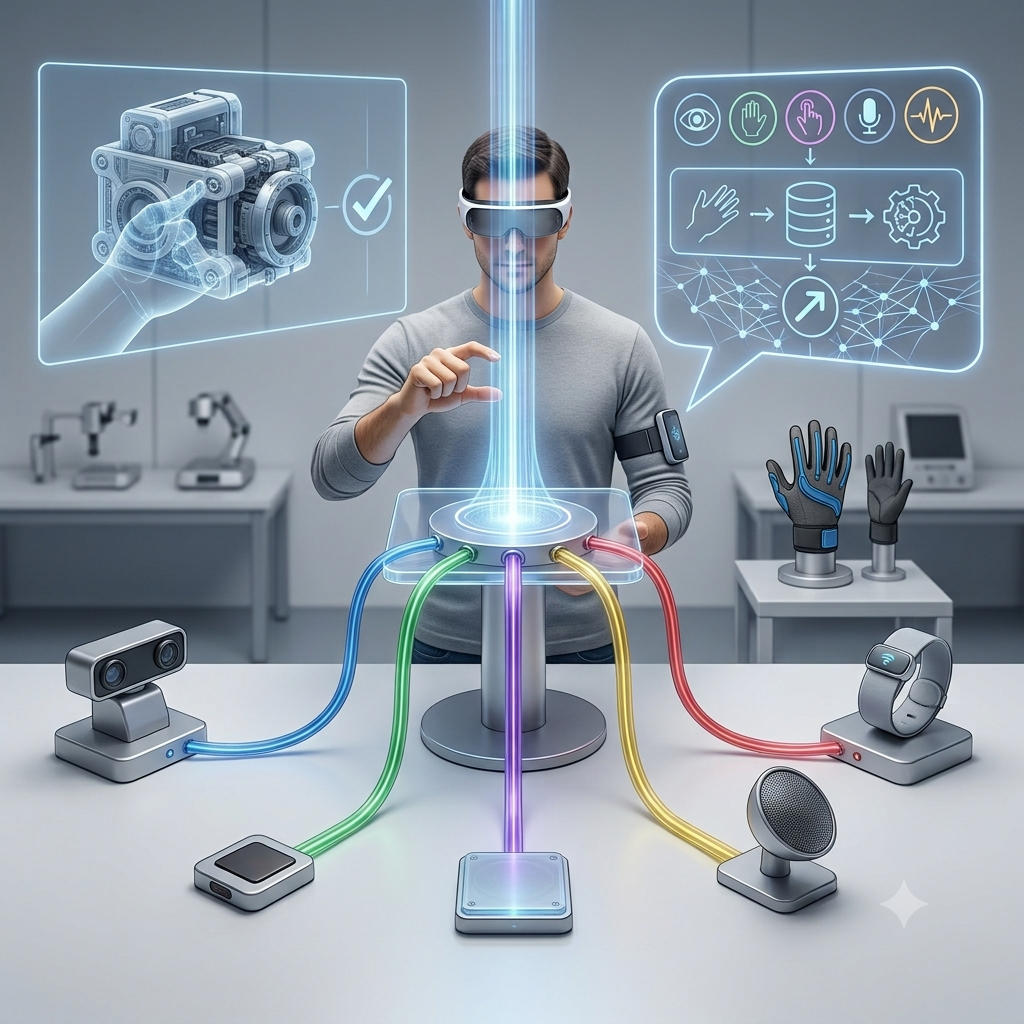
Making XR interaction natural and reliable
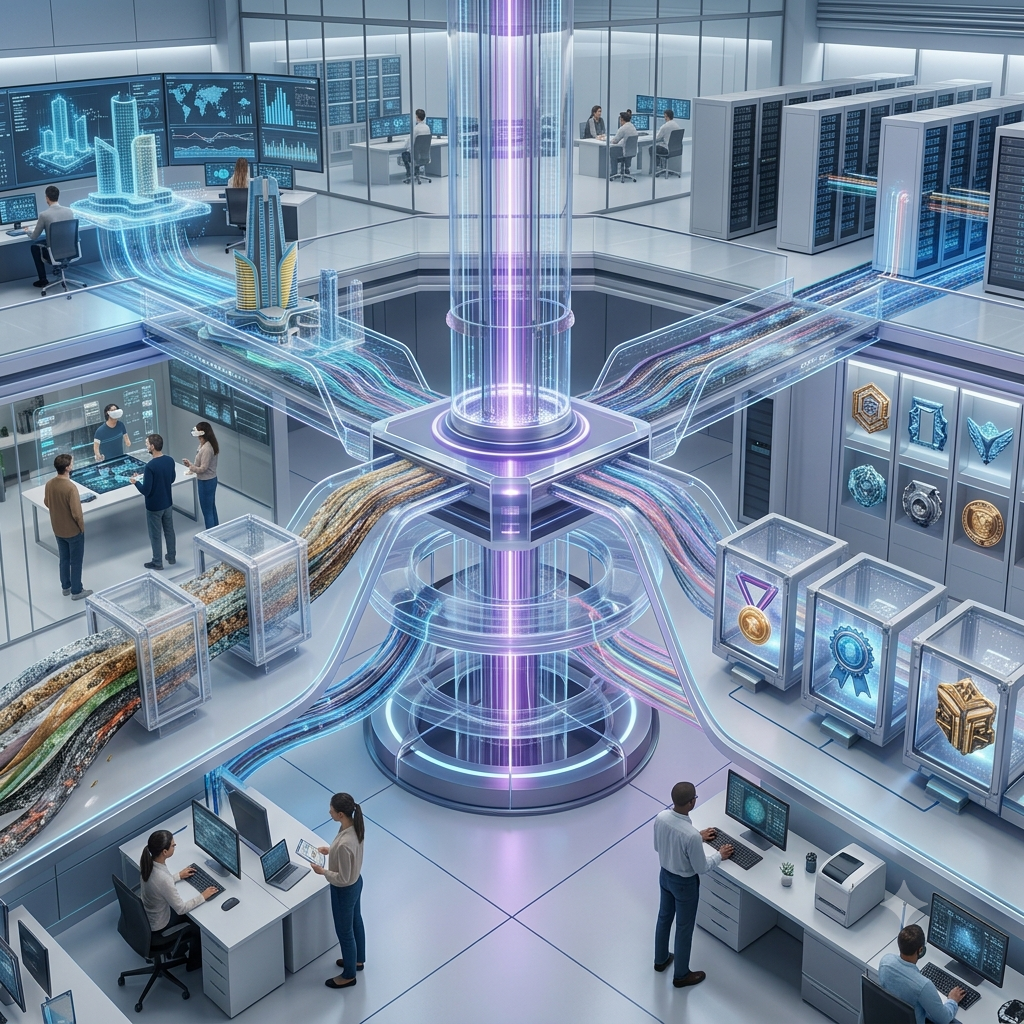
Building the backbone
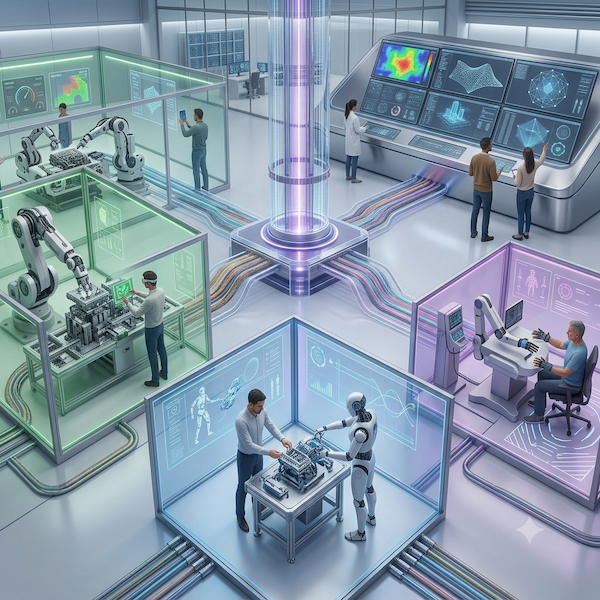
Proving it works, responsibly
Expected impact
By the end of the project, VICTOR-XR aims to demonstrate, with real numbers from real pilots:
- Faster, more natural interaction in XR, with sub-second response times between what a person does and what the system understands.
- Fewer design and assembly errors caught earlier, before physical prototypes are built.
- Measurable ergonomic and safety improvements in human–robot collaboration.
- Better therapy adherence and outcomes for patients doing rehabilitation exercises.
- Reusable playbooks that let other organisations across Europe replicate these results in their own sector.